Can an LLC Have Employees? Everything You Need to Know in 2026
Disclosure: Some of the links in this article are affiliate links, meaning we may earn a commission if you click through and make a purchase, at no additional cost to you. We only recommend services we've researched and believe will be genuinely helpful.
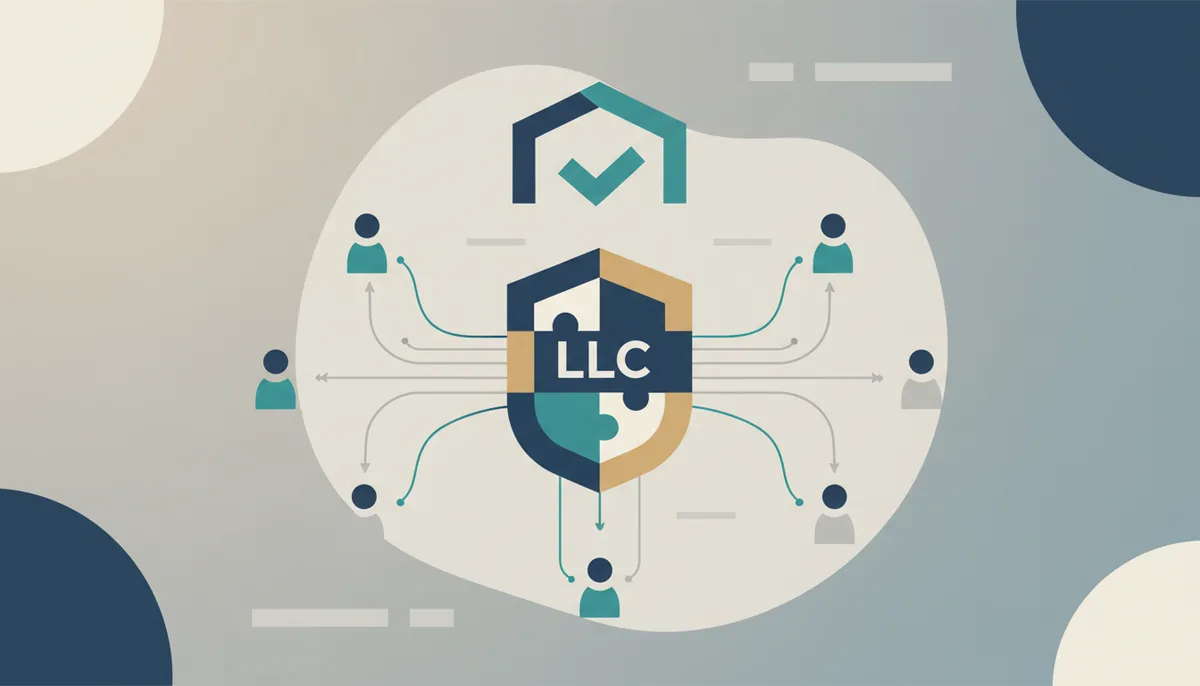
The short answer is yes — an LLC can absolutely have employees. In 2026, the vast majority of small businesses operating as LLCs have at least one W-2 worker on payroll, often starting with the owner themselves. Whether you’re running a consulting firm, a cleaning business, or a retail operation, your LLC structure places no restriction on hiring a team.
What many new business owners discover, though, is that the question “can an LLC have employees” is really just the beginning. The more important questions are: how do you hire legally, what are your obligations as an LLC employer, and does your structure still make sense once you’re carrying a payroll?
If you haven’t yet formed your LLC, services like ZenBusiness make the initial setup fast and affordable — their plans start at $0 plus state fees, and they handle the registered agent requirement that every state mandates. But once that LLC is active, you need a clear plan for bringing on staff the right way. This guide covers everything: the legal framework for hiring under an LLC, payroll tax obligations, whether LLC owners can be employees, and when your growing team might signal it’s time to reassess your entity structure.
Yes, an LLC Can Have Employees — Here’s What the Law Actually Says
Under federal law, there is no restriction on LLCs having employees. The IRS treats LLCs as employers the same way it treats corporations or sole proprietorships — once you hire W-2 workers, you take on the same employer obligations regardless of entity type.
What matters for hiring is your Employer Identification Number (EIN), not your LLC status. You must obtain an EIN before you can put anyone on payroll. If you don’t have one yet, you can apply directly at IRS.gov in about 10 minutes at no cost.
There are two categories of people who might work for your LLC:
- W-2 employees — traditional workers who operate under your direction and control, for whom you withhold income tax, Social Security, and Medicare contributions
- 1099 independent contractors — self-employed individuals who invoice you for services and handle their own tax obligations
Both can work for an LLC, but the classification question matters enormously. The Department of Labor’s economic reality test looks at factors like behavioral control, financial control, and integration into your core business to determine proper classification. Misclassifying an employee as a contractor is one of the most costly mistakes small business owners make — and the IRS has stepped up enforcement on this front significantly in recent years.
The Steps to Hire Employees Under Your LLC Legally
Once you’ve decided to bring on staff, here is the practical compliance checklist:
1. Obtain your EIN Every LLC that plans to hire employees must have an EIN, even a single-member LLC that previously operated without one. Apply free at IRS.gov — approval is typically immediate.
2. Register with your state’s employer agencies Most states require you to register separately as an employer with the state department of revenue and/or workforce commission. This is distinct from your LLC registration with the Secretary of State. In Texas, you’ll register with the Texas Workforce Commission for unemployment insurance. In California, it’s the Employment Development Department. This step catches many first-time employers off guard.
3. Set up payroll You’ll need a payroll system to calculate withholdings accurately and meet deposit deadlines. Options range from software like QuickBooks Payroll (starting around $45/month) to full-service providers like Gusto (starting at $40/month plus $6 per employee). For most small LLCs, a service is worth the cost — penalties for incorrect withholding add up fast.
4. Obtain workers’ compensation insurance Nearly every state requires workers’ comp once you have employees. Costs vary sharply by industry: a desk-based worker might run $0.30–$0.50 per $100 of payroll, while a construction worker could be $5–$15 per $100. Operating without required coverage creates personal liability exposure that can pierce your LLC’s protection.
5. Post required federal and state workplace notices Federal law mandates posting notices covering the Fair Labor Standards Act, OSHA, FMLA, and other regulations. These are available free from the Department of Labor. States layer on additional requirements.
6. File new hire reports All states require employers to report new hires to a state directory within a set timeframe — typically 20 days from the hire date.
In my experience, the payroll setup and state registration steps are where most LLC owners get tripped up. The LLC formation itself is the easy part — services like Northwest Registered Agent handle that cleanly, including registered agent service for $125 per year. The employer compliance side requires more hands-on attention to your specific state’s rules.
Can LLC Members (Owners) Be Employees of Their Own LLC?
This is where LLC taxation gets nuanced — and the answer depends entirely on how your LLC is taxed.
Default-taxed LLCs (sole proprietorship or partnership treatment)
For single-member LLCs and multi-member LLCs using default IRS taxation, members are not treated as employees. They are self-employed individuals. This means:
- You do not receive a W-2 from your LLC
- You pay self-employment tax (15.3% on net earnings up to $176,100 in 2026, then 2.9% above that cap)
- You take owner’s draws rather than a formal salary
You cannot pay yourself a deductible “salary” as a pass-through LLC owner under default taxation. This surprises many new business owners who assume LLC and payroll go hand-in-hand automatically.
LLCs taxed as S-Corps
If your LLC has elected S-Corp tax treatment with the IRS, owner-members who actively work in the business must receive a “reasonable salary” and will be issued a W-2. This creates a meaningful tax advantage: you split your income between salary (subject to payroll taxes) and distributions (not subject to self-employment tax).
For example, if your LLC nets $200,000 and you elect S-Corp treatment, you might pay yourself a reasonable salary of $90,000 and take $110,000 as a distribution. Payroll tax applies only to the $90,000, potentially saving $12,000–$16,000 annually compared to paying self-employment tax on the full amount.
For a thorough breakdown of when this election makes financial sense, see our guide on LLC vs S-Corp: Which Is Better for Taxes? If you’re still weighing the basic structure decision, the LLC vs S-Corp comparison covers the full picture.
LLC Payroll Taxes and Employer Obligations: The Numbers
When your LLC hires W-2 employees (non-owner workers), here is exactly what you owe as an employer in 2026:
Federal payroll tax responsibilities:
- Federal income tax withholding — determined by each employee’s W-4
- Social Security (OASDI) — 6.2% employer share + 6.2% employee share on wages up to $176,100
- Medicare — 1.45% employer + 1.45% employee (no wage cap; an additional 0.9% applies to high earners but is the employee’s responsibility)
- Federal Unemployment Tax (FUTA) — 6% on the first $7,000 of each employee’s wages; a credit reduces this to an effective 0.6% if you pay state unemployment taxes on time
State payroll taxes vary by location. Some states have no income tax (Texas, Florida, Nevada), while others layer on additional withholding and unemployment obligations.
Deposit schedules are non-negotiable. The IRS requires payroll tax deposits on a monthly or semi-weekly schedule based on your prior-period tax liability. Missing a deposit deadline triggers penalties of 2–10% of the amount owed. This is not a system that tolerates “I’ll catch up next month.”
You’ll also file:
- Form 941 — quarterly payroll tax return
- Form 940 — annual FUTA return
- W-2s — to employees by January 31 each year
- W-3 — transmittal to the Social Security Administration
This is a real administrative burden, which is why most LLC employers with more than two or three employees use a dedicated payroll service rather than handling it manually.
When Growing Your Team Should Make You Rethink Your Structure
The question of whether an LLC can have employees becomes more strategic when you start evaluating structure optimization as your payroll grows.
In 2026, the general benchmark among tax advisors is that once your LLC nets $50,000–$60,000 or more annually, the S-Corp election is worth a serious look. With employees already on payroll, the transition is operationally simpler — you’re already running payroll infrastructure, so adding an owner-salary component doesn’t represent a dramatic change.
There’s also the benefits angle. LLCs taxed as pass-throughs can’t deduct 100% of health insurance premiums as a business expense the same way S-Corp owner-employees can. Once you’re offering group health coverage to a team, the entity structure starts affecting how those costs flow through your books.
If you’re evaluating your formation options before your first hire, our best LLC formation services comparison covers current pricing and features across the top providers. For a direct comparison, ZenBusiness vs LegalZoom is worth reading — ZenBusiness’s basic formation plan starts at $0 plus state fees, while LegalZoom’s comparable plan runs $79 plus state fees with several features that ZenBusiness includes at lower tiers or free.
Common Mistakes LLCs Make When Hiring Their First Employee
I’ve seen the same errors repeated across dozens of LLCs bringing on their first hire. Here’s what to avoid:
Skipping the EIN before making the offer. You cannot onboard a W-2 employee without an EIN. Don’t wait until day one to apply.
Misclassifying employees as contractors. If you control how, when, and where someone works, they’re almost certainly an employee under the IRS and DOL tests. The penalties for misclassification include back taxes, interest, and fines — and the IRS has been increasingly aggressive on this issue.
Forgetting state employer registration. Your LLC’s Secretary of State filing doesn’t register you as an employer. You need to complete that separately with your state’s labor and revenue agencies.
Operating without workers’ compensation. In most states, workers’ comp is mandatory from day one. Non-compliance exposes you to personal liability that the LLC structure cannot shield you from.
Treating payroll informally. Cash payments, no withholding, no W-2s — this is an audit magnet. The IRS uses sophisticated income matching systems. It is not worth the risk.
Not reviewing your operating agreement. If your LLC has a formal operating agreement, confirm whether it requires member approval for compensation decisions. In multi-member LLCs, this oversight can create internal disputes.
If you’re still early in your formation journey and want to understand the full picture of what an LLC is and how it works, the LLC beginner’s guide covers the foundational concepts clearly.
Frequently Asked Questions
Can a single-member LLC have employees? Yes. A single-member LLC can hire employees without restriction. The “single-member” designation refers to ownership, not staffing. Once you bring on a W-2 worker, you’ll need an EIN and must comply with all federal and state employer requirements, just like any other employer.
Do employees of an LLC receive W-2 forms? Yes. W-2 employees of an LLC receive W-2 forms the same way they would from any corporation or other employer type. The LLC must file W-2s with the Social Security Administration and provide copies to employees by January 31 each year.
Can an LLC owner pay themselves a salary? It depends on tax treatment. In a default-taxed LLC, members take owner’s draws rather than salaries. In an LLC taxed as an S-Corp, owner-members who work in the business are required to receive a reasonable salary and are issued a W-2.
What payroll taxes does an LLC owe for employees? As an LLC employer, you pay the employer share of Social Security (6.2%) and Medicare (1.45%) taxes, federal unemployment tax (FUTA), and any applicable state unemployment contributions. You also withhold the employee’s share of Social Security, Medicare, and federal (and often state) income tax from each paycheck.
How many employees can an LLC have? There is no legal limit. LLCs can scale to thousands of employees. Some of the largest private employers in the United States operate under LLC structures. Headcount is not constrained by the entity type.
Does hiring employees affect my LLC’s liability protection? Hiring employees doesn’t eliminate your liability protection, but it does create new categories of exposure — employment discrimination claims, wage violations, wrongful termination suits. These can be brought against the LLC directly. Many LLC owners with employees add Employment Practices Liability Insurance (EPLI) as a result.
Does an LLC need workers’ compensation insurance for employees? In almost every state, yes. Requirements vary — some states mandate coverage from the very first employee, others set a minimum threshold. Check your specific state’s rules before your first hire, as operating without required workers’ comp carries serious penalties.
Is it more tax-efficient to hire employees as an LLC or an S-Corp? For most small operations early on, the default LLC structure is simpler and sufficient. As profits grow — generally past $50,000–$60,000 in net income — the S-Corp election becomes increasingly tax-efficient because owner-employees can take distributions not subject to self-employment tax. The trade-off is added compliance complexity and cost. Our LLC vs S-Corp guide covers this comparison in detail.
The Bottom Line
Can an LLC have employees? Unequivocally yes — with no legal ceiling on headcount, no structural barrier to hiring, and the same access to W-2 employment arrangements as any corporation. What the process does require is disciplined attention to the employer compliance framework: EIN, state registration, payroll withholding, unemployment insurance, and workers’ comp.
The more interesting question for most owners isn’t whether they can hire employees under an LLC, but whether their structure is optimized for the team they’re building. As payroll grows, tax planning around the S-Corp election and owner compensation becomes increasingly valuable.
If you’re at the starting line, ZenBusiness and Northwest Registered Agent are two formation services we consistently recommend — both handle the LLC setup cleanly so you can focus your attention on the employer compliance work that actually requires your hands-on effort. Build the team. Just do it right.
Related LLC Operations Guides
- How to add a member to an LLC — distinguishing W-2 hires from member admissions
- LLC member-managed vs. manager-managed — how management structure affects W-2 owner roles
- How to transfer LLC ownership — equity changes alongside hiring
- LLC quarterly tax payments guide — payroll tax interaction with quarterly estimates
- Best LLC formation services for 2026 — for new LLCs about to hire
The author name used in this article may be a pen name or pseudonym and is used for illustrative and editorial purposes only. This article is for informational purposes only and does not constitute investment, tax, or legal advice. Consult qualified professionals — including a licensed CPA or employment attorney familiar with your state — before making financial or hiring decisions.

Sarah Mitchell
Sarah has researched and tested over 20 LLC formation services since 2021. She has personally formed LLCs in 5 states.