How to File a BOI Report Step by Step: The Complete 2026 Guide
Disclosure: Some of the links in this article are affiliate links, meaning we may earn a commission if you click through and make a purchase, at no additional cost to you. We only recommend services we've researched and believe will be genuinely helpful.
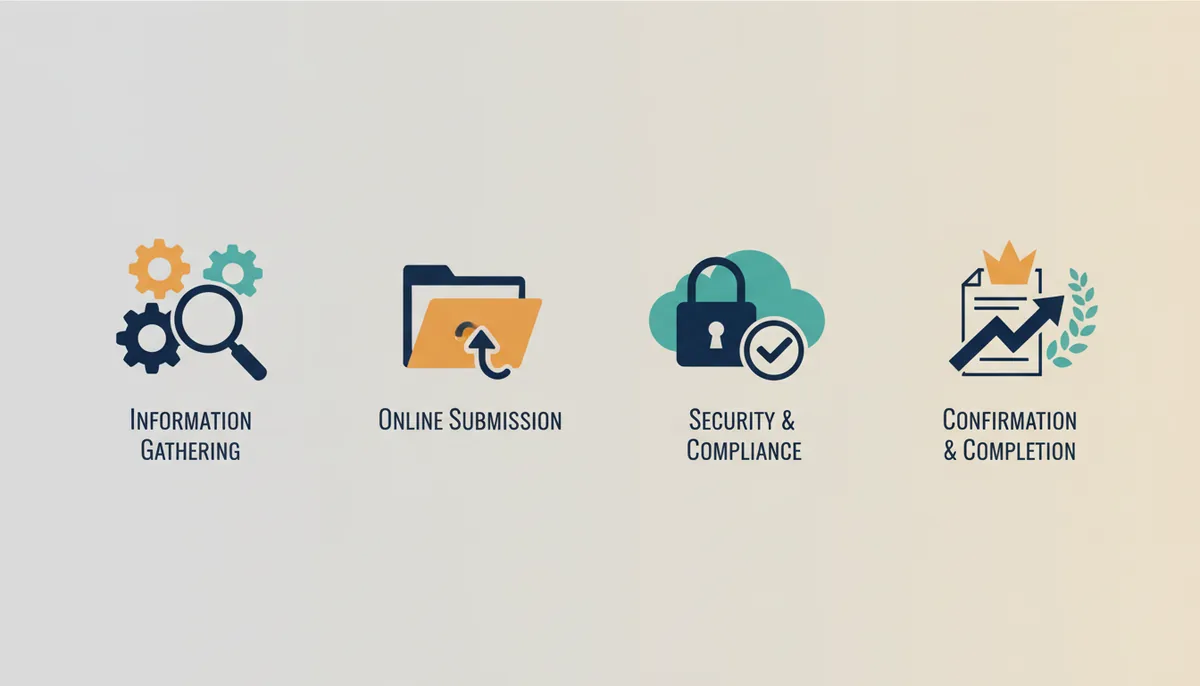
If you own an LLC or small corporation, there’s a federal filing requirement that’s been tripping up business owners across the country — the Beneficial Ownership Information (BOI) report. Knowing exactly how to file a BOI report step by step is no longer optional for most small businesses operating under the Corporate Transparency Act (CTA). Get it wrong, ignore it, or miss your deadline, and you’re looking at civil penalties up to $591 per day and potential criminal charges.
This guide walks you through the entire BOI filing process from start to finish — who needs to file, what information you’ll need, and exactly how to submit your report through FinCEN’s online system. If you’re still in the process of forming your LLC and want compliance built in from day one, services like Northwest Registered Agent ($39 + state fees) include registered agent service and can help you stay on top of post-formation obligations like this one.
Before we dive into the step-by-step process, let’s briefly address the legal backdrop. The BOI requirement has faced significant court challenges since it was first enacted. As of early 2026, FinCEN has resumed enforcement following the resolution of several federal injunctions that temporarily paused the requirement in late 2024 and early 2025. Always verify current enforcement status at fincen.gov before filing, and consult a qualified attorney if your situation is complex.
What Is a BOI Report and Who Needs to File?
The BOI report — formally called the Beneficial Ownership Information Report, or BOIR — is a disclosure filed with the Financial Crimes Enforcement Network (FinCEN), a bureau of the U.S. Department of the Treasury. Its purpose is to create a federal registry of who actually owns and controls American businesses, a tool designed to combat money laundering, shell company fraud, and other financial crimes.
For a thorough overview of the legal foundation behind this requirement, see our guide on what is a BOI report and who needs to file.
Who must file? Most LLCs, corporations, and similar entities formed or registered in the United States are considered “reporting companies” and must file. This includes:
- Single-member LLCs
- Multi-member LLCs
- Corporations (S-corps and C-corps)
- Limited partnerships, in many cases
- Foreign entities registered to do business in the U.S.
Who is exempt? FinCEN has carved out 23 specific exemptions. The most commonly applicable to small business owners include:
- Large operating companies — entities with 20+ full-time employees, over $5 million in gross receipts, and a physical U.S. office
- Publicly traded companies — already subject to SEC disclosure rules
- Banks, credit unions, and insurance companies — regulated by other federal agencies
- Tax-exempt nonprofits — 501(c) organizations
- Inactive entities — companies that have existed for over a year, have no assets, no ownership changes in the past year, and are not engaged in any business
If your LLC was formed last year and is still in startup mode with no revenue yet, you almost certainly do not qualify for the large operating company exemption. In my experience advising early-stage businesses, the most common mistake I see is owners assuming they’re exempt when they’re not. When in doubt, file — the process takes under 30 minutes and it’s free.
What Information You Need Before You Start
Filing is much smoother when you gather all required information before you open the FinCEN portal. Here’s exactly what you’ll need:
For the Reporting Company
- Full legal name of the company
- Any trade names or DBAs (doing business as names)
- Current street address of principal place of business (no P.O. boxes)
- State, tribal, or foreign jurisdiction of formation or registration
- Taxpayer Identification Number (EIN) — or foreign equivalent
For Each Beneficial Owner
A beneficial owner is any individual who, directly or indirectly:
- Owns or controls 25% or more of the company’s ownership interests, OR
- Exercises substantial control over the company (e.g., a CEO, CFO, or any senior officer with significant authority)
For each qualifying individual, you’ll need:
- Full legal name
- Date of birth
- Current residential address (business addresses are not accepted for individuals)
- A unique identifying number from an acceptable ID document:
- U.S. passport
- State driver’s license
- State-issued ID
- Foreign passport (if no U.S. document is available)
- A clear image of that ID document (JPEG, PNG, or PDF, under 4MB)
For Company Applicants (New Entities Only)
If your company was formed on or after January 1, 2024, you must also report the “company applicant” — the individual who physically filed the formation documents (e.g., the attorney or registered agent who submitted your Articles of Organization). If you filed your own LLC paperwork, that’s you. You’ll need the same identifying information for this person as you would for a beneficial owner.
Companies formed before January 1, 2024 do not need to report company applicants.
How to File a BOI Report Step by Step
Here’s the complete walkthrough of the actual filing process through FinCEN’s BOIR e-filing system.
Step 1: Go to FinCEN’s Official BOIR Portal
Navigate to the official filing portal at boiefiling.fincen.gov. This is the only authorized platform for submitting BOI reports — it is completely free. There is no filing fee.
Be aware that several third-party websites offer to file your BOI report for fees ranging from $49 to $299. These services are not inherently scams — they may offer legitimate value for complex ownership structures — but they are not required. The government portal is straightforward for most single-owner or simple multi-owner LLCs.
Step 2: Select Your Filing Type
On the portal, you’ll be prompted to select one of four filing types:
- Initial report — first-time filing for your company
- Updated report — filed when any previously reported information changes (e.g., a new beneficial owner acquires a 25%+ stake, or an owner changes their address)
- Corrected report — filed to fix an error in a previously submitted report
- Newly exempt — filed when a company that previously reported now qualifies for an exemption
For most first-time filers, select Initial report.
Step 3: Enter Reporting Company Information
Fill in your company’s legal information as it appears on your state formation documents:
- Full legal name (match your Articles of Organization exactly)
- Any DBAs or trade names currently registered
- EIN (you’ll need this — if you don’t have an EIN yet, obtain one from the IRS before filing)
- Jurisdiction of formation (the state where you formed your LLC)
- Current principal business address
Double-check that your address is a physical street address. FinCEN will not accept a registered agent address or P.O. box as the company’s principal place of business.
Step 4: Enter Beneficial Owner Information
For each beneficial owner, complete a separate section with:
- Full legal name
- Date of birth
- Residential address
- ID type and document number
- Upload a clear image of the ID
If your LLC has two members each owning 50%, both must be reported. If you have five members each owning 20%, none meets the 25% ownership threshold — but you should still check whether any of them exercises “substantial control” as a senior officer, in which case they must also be reported regardless of ownership percentage.
This is where the process gets nuanced for more complex ownership structures. A holding company that owns 30% of your LLC does not get reported as a beneficial owner — instead, you trace through the structure to identify the individual humans who ultimately own or control that stake.
Step 5: Enter Company Applicant Information (If Applicable)
If your company was formed on or after January 1, 2024, complete this section for the person who filed your formation documents. The same ID upload is required.
If your company was formed before January 1, 2024, skip this section entirely.
Step 6: Review Everything Carefully
Before submitting, review every field on the summary screen. Common errors that trigger corrected filings include:
- Typographical errors in names or ID numbers
- Using a business address instead of a residential address for a beneficial owner
- Missing a beneficial owner who exercises substantial control but owns less than 25%
- Using an expired ID document
The BOIR system does not save drafts — if you close the browser mid-session, you’ll need to start over. Plan to complete the filing in one sitting, which typically takes 20–30 minutes for a straightforward LLC.
Step 7: Submit and Save Your Confirmation
Click Submit on the final review page. FinCEN will generate a BOIR ID number confirming your submission. Save or download this confirmation — it’s your proof of filing. There is no paper copy mailed to you.
Store the confirmation securely. If you’re ever questioned about compliance, this document is your first line of defense.
BOI Report Deadlines You Need to Know in 2026
Deadlines differ based on when your company was formed:
| Company Formation Date | Filing Deadline |
|---|---|
| Before January 1, 2024 | January 1, 2025 (past — file immediately if overdue) |
| January 1, 2024 – December 31, 2024 | 90 days from formation date |
| January 1, 2025 or later | 30 days from formation date |
| Existing report with changed info | 30 days from the date of change |
If you formed your LLC in 2025 or 2026 and haven’t filed yet, the clock is ticking from your formation date. Review our detailed breakdown of BOI report deadlines in 2026 for state-by-state considerations and transition-period nuances.
Penalties for Not Filing — They’re Severe
Missing your BOI filing isn’t a minor administrative slip. Under the Corporate Transparency Act, violations can result in:
- Civil penalties of up to $591 per day for each day the violation continues (adjusted for inflation — the original $500/day figure has already been increased)
- Criminal penalties of up to $10,000 in fines and up to two years in prison for willful violations
The BOI report penalties for late filing can compound quickly. A 30-day delay at $591/day is nearly $18,000 in potential exposure. FinCEN has stated that it will prioritize willful non-filers over technical errors, but don’t count on leniency — the agency has enforcement tools and the incentive to use them as the registry matures.
Common Mistakes to Avoid
I’ve worked with dozens of small business owners navigating this requirement for the first time, and the same errors keep surfacing:
1. Assuming you’re exempt without checking. The 23 exemptions sound like a long list, but most small LLCs don’t qualify for any of them. Read each exemption carefully before concluding you don’t need to file.
2. Reporting a business address for beneficial owners. FinCEN requires the current residential address of each individual. This is a frequent source of corrected filings.
3. Forgetting to update after ownership changes. The BOI report is not a one-time event. Any time a beneficial owner’s information changes — new address, new passport, change in ownership percentage — you have 30 days to file an updated report.
4. Using an outdated or expired ID. FinCEN requires a current, unexpired document. If a beneficial owner’s driver’s license expired, renew it before filing.
5. Not reporting a controlling person who owns less than 25%. An executive director of a nonprofit or a CEO who owns zero equity can still be a reportable beneficial owner if they exercise substantial control.
For a comprehensive look at the LLC formation landscape and compliance obligations, see our BOI report for LLC owners in 2026 guide.
Should You Use a Service to File for You?
As mentioned, FinCEN’s portal is free and manageable for simple ownership structures. But there are situations where paying for help makes sense:
- You have multiple beneficial owners with complex relationships
- Your LLC is owned by trusts or other entities (ownership tracing is required)
- You’re uncomfortable with federal government portals and want a compliance record
Services like ZenBusiness and Northwest Registered Agent have introduced BOI filing assistance to their compliance product suites. Northwest, for example, includes compliance alerts and reminders as part of its registered agent service — worth considering given that you’ll need to file updated reports anytime ownership information changes.
LegalZoom also offers BOI filing assistance, though typically at a higher price point than Northwest or ZenBusiness. For a detailed comparison of what each service includes and charges, see our best LLC formation services review.
If you’re weighing DIY vs. service-assisted filing, the break-even point is roughly this: if your LLC has more than two beneficial owners or any trust/entity ownership, the $49–$99 filing assistance fee is probably worth paying to avoid a corrected report later.
Staying Compliant After Your Initial Filing
The initial BOI report is just the starting point. The ongoing compliance obligation is real:
- Address change for a beneficial owner? File an updated BOIR within 30 days.
- New member joins with 25%+ ownership? File an updated BOIR within 30 days.
- Company undergoes a merger or acquisition? The resulting entity may need to file a new initial report.
- Your company becomes exempt? File a “newly exempt” report to close out your record.
Building a compliance calendar for your LLC — covering state annual reports, registered agent renewals, and federal filings like the BOIR — is one of the most valuable things a small business owner can do in 2026 to avoid late fees and penalties across the board. Our BOI report guide has a printable compliance checklist worth bookmarking.
FAQ: How to File a BOI Report Step by Step
How long does it take to file a BOI report? For a straightforward LLC with one or two beneficial owners, the filing process typically takes 20–30 minutes once you have all your documents ready. Complex ownership structures with multiple members or entity-level owners can take longer.
Is there a fee to file a BOI report with FinCEN? No. Filing directly through FinCEN’s BOIR portal at boiefiling.fincen.gov is completely free. Third-party services that charge $49–$299 for BOI filing assistance are optional — they are not required.
What happens if I file my BOI report late? Civil penalties can reach $591 per day for each day the violation continues. Willful non-filing can result in criminal penalties including up to $10,000 in fines and up to two years in prison. If you’ve missed your deadline, file immediately — every additional day adds to potential exposure.
Do I need to file a new BOI report every year? No. The BOI report is not an annual filing. You file an initial report when you form your company, and then file updated reports within 30 days any time reportable information changes (ownership, addresses, identifying documents, etc.).
What is a “company applicant” and do I need to report one? A company applicant is the person who physically filed your company’s formation documents with the state. You are only required to report a company applicant if your company was formed on or after January 1, 2024. Companies formed before that date do not need to report company applicants.
Can I file a BOI report on behalf of someone else? Yes. You can file on behalf of another person or entity, but you must certify that the information is accurate. Many attorneys and registered agents file BOI reports on behalf of their clients.
What if I have an LLC but it has no business activity? Most inactive LLCs still have to file unless they meet the specific “inactive entity” exemption — which requires the entity to have been in existence for over a year, hold no assets, have no ownership transfers in the prior 12 months, and not be party to any active business activity. Simply being dormant is not sufficient on its own.
Where can I verify my BOI report was successfully submitted? Immediately after submission, FinCEN’s portal generates a BOIR ID confirmation number. Save or download this document. There is no secondary confirmation email or paper notice.
Conclusion
The BOI report requirement is one of the most significant new federal compliance obligations for small business owners in recent memory. But once you understand the structure of the filing — who qualifies as a beneficial owner, what information is required, and how the FinCEN portal works — the actual process is manageable. The real risk lies in procrastination, misunderstanding the exemptions, or forgetting to file updates when information changes.
File early, save your confirmation, and build BOIR updates into your ongoing compliance calendar. The penalties for getting this wrong are simply too severe to ignore in 2026.
For more on staying compliant as an LLC owner, see our guides on BOI report deadlines in 2026, penalties for late filing, and BOI report requirements for LLC owners.
The author name used in this article may be a pen name or pseudonym and is used for illustrative and editorial purposes only. This article is for informational purposes only and does not constitute investment, tax, or legal advice. The information provided reflects conditions as of the publication date and may not account for subsequent regulatory or legal developments — verify current FinCEN requirements at fincen.gov before filing. Consult qualified professionals before making financial or legal decisions.

James Caldwell
James Caldwell is a corporate compliance and tax strategist with over 15 years of experience helping small business owners navigate entity selection, tax planning, and regulatory requirements.