LLC for Mobile Car Detailing: Why You Need One and How to Set It Up in 2026
Disclosure: Some of the links in this article are affiliate links, meaning we may earn a commission if you click through and make a purchase, at no additional cost to you. We only recommend services we've researched and believe will be genuinely helpful.
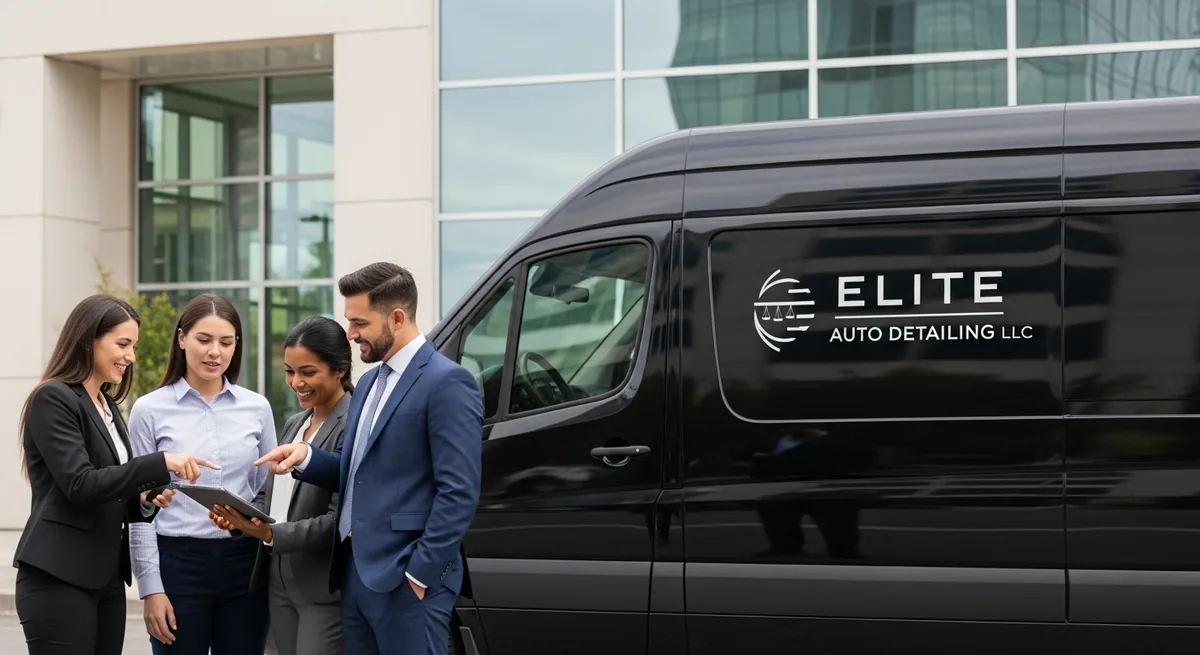
The mobile car detailing industry has exploded in recent years, and heading into 2026 it shows no signs of slowing down — IBISWorld puts the U.S. auto detailing market at over $14 billion annually, with mobile operations capturing a growing share of that figure. If you’re running a mobile operation, you’re likely spending more time thinking about ceramic coatings and paint correction than about your legal structure. That’s understandable. But your business structure is one of the most consequential decisions you’ll make — and it doesn’t have to be complicated.
Forming an LLC for mobile car detailing separates your personal assets from your business liabilities, can save you thousands in annual taxes, and gives your operation the professional credibility that commercial clients expect. ZenBusiness can get you set up for as little as $0 plus your state filing fee — typically under $200 total — and the liability protection you gain is worth far more than that cost on day one.
This guide covers everything you need: why the LLC structure matters specifically for detailers, what it actually costs in 2026, the tax advantages it unlocks, and exactly how to get it done efficiently.
Why Mobile Car Detailers Need an LLC in 2026
Mobile car detailing is physically demanding, chemical-intensive work performed in clients’ driveways, parking lots, and private property. That combination creates a specific set of liability exposures that a sole proprietorship leaves completely unshielded.
Consider a realistic scenario: you apply a ceramic coating to a client’s $80,000 BMW. Something goes wrong — maybe there was a pre-existing paint defect that wasn’t documented, or the coating didn’t cure correctly under abnormal humidity. The client claims the paint is permanently damaged and demands compensation. Without an LLC for your mobile car detailing business, that lawsuit targets you personally. Your savings account, your home equity, your personal vehicle — all of it is fair game in a civil judgment.
Or consider environmental exposure. Many municipalities regulate automotive wastewater discharge, and detailing runoff — containing surfactants, degreasers, and other compounds — often can’t legally enter storm drains. A regulatory fine or civil complaint directed at your business should land on a business entity, not on your personal balance sheet.
I’ve seen too many mobile detailers — genuinely skilled technicians — get financially blindsided by a single client dispute because they never bothered to form an entity. A $150 LLC formation fee looks entirely different after you’ve written a five-figure personal check to settle a claim that should have been a business problem. The LLC structure doesn’t eliminate risk, but it builds a legal wall between your business activities and your personal finances. That wall is the foundation of everything else.
The Real Risks of Operating as a Sole Proprietorship
Most mobile detailers start as sole proprietors by default — you buy some supplies, open a social media account, and start taking bookings. No paperwork required. The problem is that a sole proprietorship creates zero legal distinction between you and your business.
Here’s what that means in practice for a mobile detailing business:
- Unlimited personal liability. If a client sues your business, they’re suing you. There is no legal firewall protecting your personal assets.
- Lost commercial accounts. Fleet managers, car dealerships, and property management companies routinely require vendors to present an LLC and carry commercial liability insurance. Operating as a sole proprietor disqualifies you from this revenue stream before the conversation even starts.
- No business banking. Most banks require an LLC and EIN to open a dedicated business checking account. Without one, you’re mixing personal and business transactions — which creates a bookkeeping nightmare and destroys your credibility with an accountant or lender.
- Maximum self-employment tax exposure. As a sole proprietor, 100% of your net income is subject to the 15.3% self-employment tax (Social Security and Medicare). An LLC taxed as an S-Corp can reduce that exposure substantially once your profits exceed $50,000–$60,000 per year.
The good news: switching from a sole proprietorship to a car detailing LLC isn’t complicated and doesn’t require hiring an attorney.
LLC vs. Sole Proprietorship: What Actually Changes for Detailers
When you form an LLC, several concrete things change — not just on paper, but in your day-to-day operations:
Liability separation becomes legally real. Your personal assets are no longer accessible to business creditors or plaintiffs, provided you maintain proper separation (dedicated business bank account, no commingling of personal and business funds).
Tax flexibility increases. An LLC defaults to pass-through taxation — profits flow to your personal return and you pay income tax at your individual rate. But once your mobile detailing business generates $50,000 or more in annual net income, you can elect S-Corp status with the IRS. This allows you to split income between a reasonable salary (subject to payroll taxes) and a distribution (not subject to self-employment tax), potentially saving $4,000–$12,000 per year. This is a real, meaningful tax strategy — not a loophole. Consult a CPA before making the election.
Business credibility improves immediately. “Martinez Mobile Detailing LLC” signals to commercial clients that you’re an established, legitimate operation. This isn’t a superficial distinction — it directly affects your ability to win fleet accounts and bid on higher-value jobs.
Banking and financing open up. With an LLC and EIN, you can open a business checking account, apply for a business credit card, and eventually qualify for small business financing.
IRS Publication 334 (Tax Guide for Small Business) is worth bookmarking — particularly the sections on self-employment tax and business deductions.
How Much Does It Cost to Form an LLC for Mobile Car Detailing?
The total cost is lower than most people expect. Here’s the honest 2026 breakdown:
State Filing Fee: Mandatory and paid directly to your state government. Ranges from:
- Low end: $50 (Kentucky, Montana, New Mexico)
- Mid-range: $100–$150 (Texas, Florida, Ohio, Colorado)
- High end: $200+ (California charges $70 plus an $800 minimum annual franchise tax; Massachusetts charges $500 to file)
Formation Service Fee: Using a service instead of filing yourself costs $0–$299 depending on the provider and plan.
Registered Agent Fee: Every LLC requires a registered agent — a person or entity with a physical address in your state who receives legal correspondence. If you use a professional service, expect $49–$299/year. Some formation services bundle this for the first year.
Total First-Year Cost: Most mobile detailers land in the $100–$350 range to get fully set up.
Here’s how the major formation services compare in 2026:
| Service | Base Plan | Registered Agent (Year 1) | Operating Agreement | Best For |
|---|---|---|---|---|
| ZenBusiness | $0 + state fee | Included free | Included | Best Overall |
| LegalZoom | $0 + state fee | $249/yr after year 1 | Add-on cost | Name recognition |
| Tailor Brands | $0 + state fee | Add-on | Add-on | Brand + LLC bundle |
| Inc Authority | Free + state fee | $99/yr after year 1 | Included | Truly free start |
| Northwest Registered Agent | $39 + state fee | Included (year 1) | Included | Privacy-focused |
| Bizee | Free + state fee | $119/yr after year 1 | Included | Budget option |
| LLC Attorney | $0 + state fee | Included | Included | Attorney-backed filing |
ZenBusiness offers the strongest overall value for most detailers. The $0 Starter plan includes registered agent service for the first year (renews at $199/year) and a basic operating agreement template. Unlike LegalZoom, which charges $249/year for registered agent renewal and treats operating agreements as a paid add-on, ZenBusiness keeps upfront costs minimal while covering everything a new LLC needs to stay compliant.
For a detailed head-to-head, see our ZenBusiness vs. LegalZoom comparison, or browse our full overview of LLC formation costs if you want to understand every line item.
Tax Benefits of an LLC for Your Mobile Car Detailing Business
Forming a car detailing LLC unlocks real tax advantages beyond liability protection. Here’s what changes on the tax side:
Pass-Through Taxation An LLC doesn’t pay corporate income tax. Profits and losses flow through to your personal return, avoiding the double-taxation problem of a C-Corp structure. For most solo detailers, this means the tax experience isn’t dramatically different from a sole proprietorship — but the deduction landscape is much richer.
Business Deductions Once you’re operating as an LLC, every legitimate business expense reduces your taxable income. For mobile detailers, that includes:
- Vehicle expenses — either actual costs (gas, insurance, depreciation, maintenance) or the standard IRS mileage rate (67 cents per mile in 2026 for business use)
- Detailing supplies — chemicals, pads, microfiber towels, clay bars, coating products
- Equipment — pressure washer, steam cleaner, extractor, dual-action polisher
- Business insurance premiums
- Marketing and advertising costs (social media ads, website hosting, business cards)
- Mobile booking and scheduling software subscriptions
- A prorated portion of your phone bill if used for business
Section 179 Expensing Rather than depreciating equipment purchases over several years, Section 179 allows you to deduct the full cost of qualifying equipment in the year of purchase. In 2026, the Section 179 limit remains at $1,160,000 — far more than the typical detailer’s equipment spend. If you invest in a new extractor, pressure washer, or generator this year, you can write off the entire purchase immediately.
S-Corp Election At $50,000+ in net annual profit, electing S-Corp tax status can produce substantial savings by reducing the amount of income subject to self-employment tax. This isn’t a DIY move — it requires setting up payroll, filing additional forms, and working with a CPA — but the math often pencils out to $5,000–$12,000 in annual savings. See our LLC vs. S-Corp tax guide for a full breakdown.
How to Set Up Your LLC for Mobile Car Detailing: Step-by-Step
The process is straightforward. Most detailers can complete it in under an hour.
Step 1: Choose Your State Form your LLC in the state where you operate and where your clients are. Online advice promoting Delaware or Wyoming formation is generally aimed at multi-state companies or investors — a mobile detailer in Georgia should form in Georgia. Forming elsewhere means paying fees and agent costs in two states with no practical benefit.
Step 2: Name Your LLC Your name must include “LLC” or “Limited Liability Company” and must be unique in your state. Check availability on your state Secretary of State’s website. Choose a name that’s searchable, professional, and reflects your actual service area if possible — “Phoenix Premium Mobile Detailing LLC” is more findable than a generic abbreviation.
Step 3: Appoint a Registered Agent Every LLC needs a registered agent with a physical in-state address to receive legal documents. You can serve as your own registered agent, but your address then becomes public record — a meaningful privacy concern. Using a professional service keeps your personal address off the public record and ensures documents are received even when you’re out on the road.
Step 4: File Articles of Organization This is the official state filing that legally creates your LLC. You can file directly through your state’s Secretary of State website or use a formation service. Using ZenBusiness takes about 10–15 minutes, costs $0 plus your state filing fee, and handles the submission on your behalf.
Step 5: Obtain an EIN Your Employer Identification Number (EIN) is your business’s federal tax ID. You need it to open a business bank account, hire employees, and file business taxes. Get one for free in about 10 minutes at IRS.gov.
Step 6: Open a Business Bank Account This step is legally critical. Keeping business and personal finances completely separate is what preserves the liability protection you just created. Commingling funds is the most common way courts “pierce the corporate veil” and hold LLC owners personally liable — which defeats the entire purpose of forming the entity.
Step 7: Draft an Operating Agreement An operating agreement documents how your LLC is managed, how profits are distributed, and what happens if something changes. Solo detailers often skip this because it feels unnecessary when you’re the only member — but banks frequently require it, and it’s your first line of defense if there’s ever a dispute about what your business structure was supposed to be. Most formation services provide a solid template at no extra charge.
Other Licenses and Permits Your Mobile Detailing Business Needs
Your LLC formation is one layer of compliance, not the whole picture. Mobile car detailers typically need additional licenses and registrations:
General Business License: Most cities and counties require a basic operating license. Fees typically run $25–$100 annually. Check your local city or county clerk’s website for requirements.
Environmental Compliance: This is a unique pressure point for detailers. Automotive runoff — containing surfactants, degreasers, and chemical compounds — is regulated in many jurisdictions. Some areas require you to collect and properly dispose of wash water; others restrict where you can detail. Check with your local public works or stormwater management department. The U.S. Small Business Administration’s licensing guide provides a useful framework for understanding where federal requirements intersect with state and local rules.
Commercial Auto Insurance: Personal auto policies almost universally exclude commercial use. If you use your vehicle to transport equipment to client locations — which every mobile detailer does — you need a commercial auto policy. Expect $1,200–$2,400/year depending on your vehicle, driving record, and state.
General Liability Insurance: GL insurance covers property damage and bodily injury claims — essential for anyone working on clients’ personal property. A solo detailer can typically get $1M/$2M in coverage for $500–$1,500/year. This is non-negotiable if you want commercial accounts. Many clients will ask for a certificate of insurance before they hire you.
If you want to see how structuring and compliance work for similar service businesses, our guides on LLC for cleaning business and LLC for pressure washing business are directly applicable — the liability and compliance landscape is very similar.
Frequently Asked Questions
Do I really need an LLC for mobile car detailing, or is insurance enough?
Insurance and an LLC serve different functions. General liability insurance pays claims when something goes wrong; an LLC prevents personal liability from attaching in the first place. You need both. Insurance has coverage limits, exclusions, and deductibles — if a claim exceeds your policy limits or falls into an exclusion, your personal assets are exposed without an LLC standing between you and the judgment.
How long does it take to form an LLC for mobile car detailing?
With a service like ZenBusiness, the filing process takes about 10–15 minutes. State processing time varies significantly: some states approve LLC filings in 1–3 business days, while others (California, for example) can take 5–15 business days under standard processing. Most states offer expedited processing for an additional $25–$100 fee.
What state should I form my mobile detailing LLC in?
Form in the state where you actually operate and serve clients. Delaware and Wyoming formation only makes sense for complex multi-state or privacy-focused scenarios. A detailer operating in Florida should form in Florida — forming elsewhere means you’re registered in two states and paying double fees with no practical benefit.
How much does it cost to maintain a car detailing LLC each year?
Annual maintenance costs include: registered agent service ($0–$199/year), annual report or franchise tax filing (varies by state — $0 in states like New Mexico, $20 in states like Kentucky, up to $800 minimum in California), and any state-specific fees. Most detailers spend $100–$400/year on LLC maintenance depending on where they operate. See our LLC cost breakdown guide for state-specific numbers.
Can I convert my existing sole proprietorship to an LLC?
Yes, and it’s straightforward. You simply form a new LLC using the process described above, then update your business bank accounts, licenses, contracts, vendor accounts, and tax filings to reflect the new entity. You don’t need to dissolve anything — you’re creating a new legal entity and transitioning your operations to it. Update your contracts and any client-facing documents to reflect your new LLC name.
Do I need a separate EIN if I’m the only member of my detailing LLC?
Technically, a single-member LLC with no employees can use the owner’s Social Security number for federal tax purposes. In practice, getting an EIN is strongly recommended: it keeps your SSN off vendor and banking paperwork, is required to open most business checking accounts, and simplifies your tax filings. Getting one is free and takes about 10 minutes at IRS.gov.
What happens if a client sues my mobile detailing LLC?
A properly formed and maintained LLC limits your exposure to your business assets — not your personal savings, home, or personal vehicle. The key word is “properly maintained”: the LLC must have its own bank account, be adequately capitalized, and not be operated as an extension of your personal finances. This is why business banking and clean bookkeeping aren’t just accounting best practices — they’re what makes your liability protection legally durable.
The Bottom Line
In 2026, running a mobile car detailing business without an LLC is an unnecessary and easily preventable risk. The cost to get started is low — typically $100–$350 all in — and the protection is immediate from the day your formation is approved. You’re building a real business with real exposure: expensive client vehicles, chemical compounds, work on private property. Your legal structure should reflect the seriousness of what you’re actually doing.
ZenBusiness is the strongest starting point for most mobile detailers: $0 plus your state filing fee, registered agent included for the first year, operating agreement template included, and the entire process takes about 15 minutes. If you want to compare options before committing, see our best LLC formation services roundup or read our full ZenBusiness review.
You’ve invested real skill, real equipment, and real time into this business. Make sure your legal structure protects all of it.
The author name used in this article may be a pen name or pseudonym and is used for illustrative and editorial purposes only. This article is for informational purposes only and does not constitute investment, tax, or legal advice. Consult qualified professionals before making financial decisions.

James Caldwell
James Caldwell is a corporate compliance and tax strategist with over 15 years of experience helping small business owners navigate entity selection, tax planning, and regulatory requirements.