LLC for Pest Control Business: Licensing, Insurance & Taxes (2026 Guide)
Disclosure: Some of the links in this article are affiliate links, meaning we may earn a commission if you click through and make a purchase, at no additional cost to you. We only recommend services we've researched and believe will be genuinely helpful.
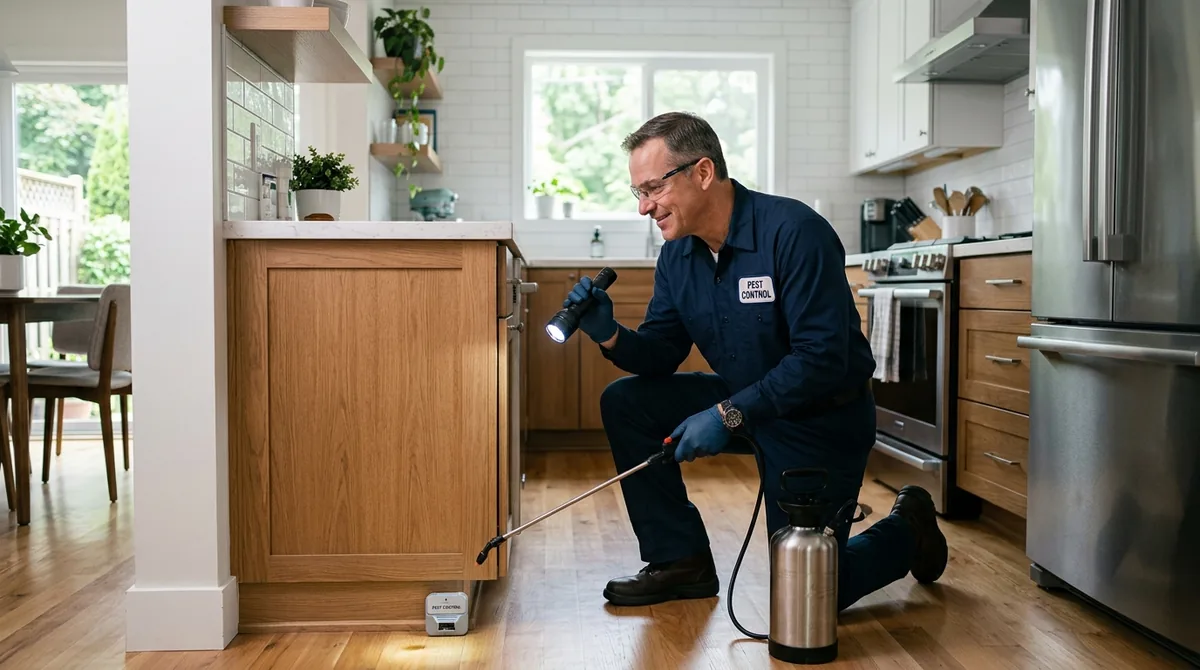
Pest control is one of the steadier small businesses you can start. Termites, ants, rodents, and bed bugs do not take a recession off, and customers sign recurring service plans that produce predictable monthly revenue. But the work also involves restricted chemicals, crawl spaces, attics, and other people’s homes and kitchens. That combination is exactly why forming an LLC for a pest control business is one of the first steps I recommend to new operators in 2026.
The setup itself is inexpensive. A formation service such as ZenBusiness can file your LLC for $0 plus your state’s filing fee on its entry-level plan, and most states charge somewhere between $50 and $500 depending on where you file. This guide covers what an LLC does and does not protect, how it interacts with pesticide licensing, which insurance you still need, how you will be taxed, and the step-by-step setup process.
Why a Pest Control Business Needs an LLC
Think about what can go wrong on an ordinary day of service calls:
- Chemical exposure claims. A customer says a treatment made their child, pet, or elderly parent sick. Even when you followed the label, you may spend months defending the claim.
- Property damage. A drilled hole hits a water line, a bait station is placed where it should not be, or a fumigation tent is mishandled. Termite work in particular involves drilling foundations and trenching, which can damage plumbing, wiring, and slabs.
- Failed or disputed treatments. If termites return after a warranty period, some customers will claim you are responsible for the structural damage, not just a re-treatment. Those numbers climb quickly.
- Vehicle and employee incidents. Once you hire a technician or add a second truck, you are exposed to auto accidents, ladder falls, and workers’ compensation issues.
- Environmental and regulatory exposure. Spills, drift onto a neighbor’s property, or improper disposal can trigger state agency action as well as private lawsuits.
If you operate as a sole proprietor, there is no legal separation between you and the business. A judgment that exceeds your insurance limits can reach your savings, your vehicle, and potentially your home. An LLC creates a legal wall between business debts and your personal assets. If you want the basics first, read our primer on what an LLC is and the comparison of an LLC vs sole proprietorship.
Here is my honest opinion, drawn from years of working with owner-operators: I’ve seen too many one-truck exterminators build a profitable route of 200 recurring customers with nothing but a personal checking account and a handshake, then watch a single disputed termite claim threaten everything they own. The LLC costs less than a few tanks of product. Skipping it is a bad trade.
What an LLC Does (and Doesn’t) Protect
An LLC is a shield, not a force field. Understand the limits before you rely on it.
What it protects:
- Your personal assets from business debts, supplier balances, and most lawsuits tied to the company
- You from contractual obligations signed in the company’s name, such as a truck lease, equipment financing, or a lease on a small warehouse
- Your family from being named alongside you in many business disputes, because the company is the defendant
What it does not protect:
- Your own negligence. If you personally apply a pesticide improperly and injure someone, courts can hold you personally responsible for your own tort, even through an LLC. The LLC protects you from your business’s liabilities, not from the consequences of your own wrongful acts.
- Personal guarantees. Lenders and equipment lessors often require you to guarantee the debt personally. Read those documents carefully.
- Veil piercing situations. If you mix personal and business funds, ignore formalities, or leave the company badly undercapitalized, a court may disregard the LLC.
- Regulatory penalties tied to you. Licensing violations can follow the individual license holder, regardless of the entity.
This is why the LLC works alongside insurance, never instead of it. Think of the LLC as the structure and insurance as the money that actually pays claims.
Licensing: The Part Most New Operators Underestimate
Unlike many small businesses, you generally cannot legally treat other people’s property for pay without credentials. Pest control is regulated at the state level, and the rules vary significantly. Verify everything with your state’s lead pesticide regulatory agency, usually the department of agriculture or a dedicated structural pest control board. The U.S. Environmental Protection Agency also publishes pesticide worker safety and applicator certification information that sets the federal baseline states build on.
In most states you should expect some combination of the following:
- A certified or licensed applicator. Someone must pass a state exam, often in categories such as general household pests, wood-destroying organisms (termites), or fumigation. Many states also require experience or a training period working under a licensed operator.
- A business license or registration. The company itself often needs a pest control business license in addition to the individual applicator’s certification.
- Proof of financial responsibility. A number of states require liability insurance or a bond at set minimums before they issue a business license.
- Recordkeeping. You will usually need to keep application records, including product, amount, location, and date, for a set number of years.
The key LLC point: the license usually names the business entity, and the entity name on your license must match the name on your insurance policy, bank account, and invoices. Form the LLC before you apply for the business license so you do not have to amend everything later. If the person holding the applicator certification leaves, many states require you to replace them quickly or stop treating, so plan around that dependency early.
For general guidance on local and state permits, the SBA publishes a helpful overview on applying for business licenses and permits.
How to Set Up Your Pest Control LLC, Step by Step
1. Choose your state and name
For almost every pest control company, form the LLC in the state where you do business. Because licensing, insurance, and customers are all local, forming in Delaware or Wyoming rarely makes sense for a service business. If you did, you would also have to register as a foreign LLC in your home state and pay both states’ fees. Pick a name that is available in your state and that you can use on your license, trucks, and website.
2. Name a registered agent
Every LLC needs a registered agent with a physical address in the state to accept legal papers. You can serve as your own agent, but then your home or shop address becomes public record, and you must be available during business hours. Since technicians are in the field all day, many owners hire a commercial agent. If privacy matters to you, Northwest Registered Agent is the provider known for it. Our guide on what a registered agent is explains the role in detail.
3. File the Articles of Organization
You file this document with your state’s business filing office. Expect fees between about $50 and $500. Some states add publication requirements, which can add real cost in a few places. Compare options in our rundown of how much an LLC costs.
4. Write an operating agreement
Even a single-member LLC should have one. It documents ownership, how profits are handled, and what happens if a member leaves or dies. It also helps support the separation between you and the company if your LLC is ever challenged. Our LLC operating agreement guide walks through the key clauses.
5. Get your EIN
An Employer Identification Number is free from the IRS. You will need it to open a business bank account, hire technicians, and apply for most licenses. Do not pay a third party for it. Our walkthrough on getting an EIN for your LLC the free IRS way covers the steps.
6. Open a business bank account and keep the money separate
This is the single most important habit for protecting the LLC. Run all revenue and expenses through the business account, pay yourself through documented owner draws or payroll, and never buy groceries on the business card.
7. Handle the license, insurance, and BOI questions
Apply for your state business license and confirm what insurance minimums apply. Also check whether any current federal beneficial ownership reporting obligations apply to your company. Rules in this area have changed several times, so read our BOI report guide and confirm current requirements before assuming either way.
Which Formation Service Is Best for Pest Control Owners?
You can file directly with your state for just the filing fee. A service is worth it if you want speed, a registered agent, and compliance reminders handled for you, because missing an annual report can put your good standing, and your license eligibility, at risk.
| Service | Typical starting price (plus state fee) | Best for |
|---|---|---|
| ZenBusiness | $0 entry plan; paid tiers add an operating agreement, EIN help, and compliance tools | Best overall value for a new operator who wants an easy start |
| LegalZoom | Starts higher, with add-ons priced separately | Owners who want a well-known brand and optional attorney access |
| Tailor Brands | Bundled with branding tools | Owners who also want a logo and website kit |
| Inc Authority | $0 service fee on basic filing | Budget-focused owners comfortable filling in details themselves |
| Northwest Registered Agent | Higher base price, registered agent included | Best for privacy and in-person support |
| Bizee | Low-cost basic filing with paid upgrades | Owners comparing the cheapest filing routes |
| LLC Attorney | Attorney-backed filing | Owners with a complex ownership situation |
Pricing and plan features change, so confirm current details on each provider’s site before you buy. Unlike LegalZoom, which tends to price extras like an operating agreement and EIN help as separate line items, ZenBusiness bundles more of the essentials into its mid-tier plan, which is why I generally steer a new pest control owner toward it first. For a head-to-head look, read our ZenBusiness vs LegalZoom comparison or the full best LLC services ranking.
Insurance You Still Need After Forming an LLC
The LLC does not replace coverage. These are the policies I would put on the checklist for a pest control company:
- Commercial general liability (CGL). This is your baseline for third-party bodily injury and property damage. Be aware that standard CGL policies often exclude pollution or chemical-related claims, which is a significant issue for pest control.
- Pollution or pesticide applicator liability. Many pest control operators need a specific policy, or a pollution endorsement, to cover chemical application. Ask your broker directly whether your CGL has a “total pollution exclusion” and what fills that gap.
- Termite and wood-destroying organism coverage (errors and omissions). If you offer termite inspections, treatments, or warranties, you need coverage for claims arising from missed damage or failed treatments. Specialty insurers handle this far better than generalist carriers.
- Commercial auto. A personal auto policy generally will not cover a truck with sprayers and chemicals used for business.
- Workers’ compensation. Required in most states once you have employees, and strongly advisable even when it is optional.
- Inland marine or equipment coverage. Sprayers, fogging equipment, and tools are expensive and frequently stolen from trucks.
- Bonds. Some states require a surety bond or proof of financial responsibility as a condition of licensing.
A good specialty broker who works with the pest control industry will save you real money and avoid coverage gaps. Premiums vary widely by state, services offered, revenue, and claims history, so get several quotes rather than relying on any number I could give you.
How a Pest Control LLC Is Taxed
By default, the IRS treats a single-member LLC as a disregarded entity. You report profit and loss on Schedule C of your personal return and pay income tax plus self-employment tax on net earnings. A multi-member LLC is taxed as a partnership by default. The IRS explains these classifications on its LLC overview page.
When an S-Corp election starts to make sense
Once your net profit is steady and well above what you would pay a hired manager to do your job, electing S-corporation tax treatment can reduce self-employment tax. You pay yourself a reasonable salary through payroll, and the remaining profit passes through without the additional 15.3% self-employment tax. The tradeoffs include payroll processing costs, added tax filings, and the requirement that your salary be “reasonable” for the work you do. A route-based business with recurring revenue often reaches this point sooner than owners expect. Run the numbers with a CPA first. See our breakdown of LLC vs S-Corp for the mechanics.
Deductions to track from day one
Pest control operators often have more deductible expenses than they realize. Keep clean records for:
- Chemicals, bait, traps, and consumables
- Sprayers, dusters, protective equipment, and tools
- Vehicle costs, either actual expenses or the standard mileage rate
- License fees, continuing education, and certification renewals
- Insurance premiums
- Software for scheduling, routing, and invoicing
- Marketing, including lead-generation fees and truck wraps
- Uniforms, where applicable
- Qualified business income (QBI) deduction eligibility, which may apply to pass-through income. Confirm current rules with your tax professional.
Collect and remit sales tax correctly where it applies. Some states tax pest control services and others do not, so check with your state’s revenue department before you invoice your first customer.
Costs: What to Budget in Year One
Here is a realistic picture of the ongoing formation-related costs, separate from your equipment and truck:
- State filing fee: roughly $50 to $500, one time
- Annual report or franchise fee: ranges from nothing in some states to several hundred dollars per year in others. California, for example, charges an $800 annual minimum, which we cover in our California LLC franchise tax guide.
- Registered agent: often $100 to $300 a year if you hire one, sometimes included free for the first year with a formation service
- Business license, applicator certification, and renewals: varies widely by state
- Insurance: typically your largest ongoing cost after labor and chemicals
If you are in a high-fee state, check whether a service’s first-year registered agent offer offsets part of the bill. The best-value path is rarely the one with the lowest sticker price on day one.
Mistakes I See Pest Control Owners Make
- Forming the LLC after getting the license. This forces name and policy changes later. Form first.
- Assuming the LLC replaces insurance. It does not, and pollution exclusions catch operators off guard.
- Commingling funds. Paying personal bills from the business account weakens your liability protection.
- Letting the applicator certification lapse. If the qualifying individual’s credentials expire, your authority to operate may expire with it.
- Skipping written service agreements. Contracts should spell out the scope of treatment, warranty terms, customer responsibilities such as preparation and access, and limits on liability.
- Missing annual reports. Falling out of good standing can jeopardize both the LLC and your license.
- Not checking local rules. Counties and cities sometimes add their own licensing or notice requirements on top of the state’s.
Frequently Asked Questions
Do I need an LLC to start a pest control business?
No law requires it, but a state license is usually required. An LLC is strongly recommended because it separates your personal assets from business liabilities. Because pest control involves chemicals and work inside customers’ homes, the liability risk is higher than in many other trades.
How much does it cost to form an LLC for a pest control company?
You will pay your state’s filing fee, which generally falls between about $50 and $500, plus any optional service fees. Formation services like ZenBusiness offer an entry plan at $0 plus the state fee, though add-ons cost extra. Ongoing costs include annual reports and a registered agent.
Can I get a pest control license in the name of my LLC?
In most states, yes, and many require the business itself to be licensed in addition to the certified applicator. Requirements differ by state, so check with your state’s pesticide regulatory agency. Forming your LLC first keeps the name consistent across your license, insurance, and bank account.
Does an LLC protect me if a customer says my treatment made them sick?
It helps protect your personal assets from business liabilities, but it does not shield you from claims arising from your own negligence. That is why pollution and applicator liability insurance matter. Consult an attorney and an insurance specialist about your specific exposure.
Should I elect S-corp status for my pest control LLC?
It can reduce self-employment tax once profits are consistent and high enough to pay yourself a reasonable salary and still save meaningfully. It adds payroll and filing costs, so discuss the numbers with a CPA before electing.
Do I need business insurance if I have an LLC?
Yes. An LLC does not pay claims. Most owners carry general liability, pollution or pesticide applicator coverage, commercial auto, and workers’ compensation if they have employees. Some states require proof of insurance or a bond for licensing.
Which state should I form my pest control LLC in?
Almost always the state where you operate and hold your license. Forming elsewhere typically means registering as a foreign LLC at home anyway and paying fees in two states.
Do I need an operating agreement for a one-person pest control LLC?
Not every state requires one, but you should have one. It documents how the company operates and supports the separation between you and the business. Our guide to the LLC operating agreement explains what to include.
The Bottom Line
Pest control rewards operators who treat it like a real business from day one: proper licensing, proper insurance, and a legal structure that protects the family while the route grows. An LLC is the straightforward foundation for all three. Form it in your home state, get the EIN, open a dedicated bank account, line up pollution-aware insurance, and put your license in the company’s name.
If you are ready to file, ZenBusiness is the option I recommend most new owners start with, with LegalZoom as a solid alternative if you prefer a larger brand. To compare every option side by side, see our best LLC formation services guide.
The author name used in this article may be a pen name or pseudonym and is used for illustrative and editorial purposes only. This article is for informational purposes only and does not constitute investment, tax, or legal advice. Licensing, insurance, and tax rules vary by state and change over time. Consult qualified professionals before making financial decisions.

James Caldwell
James Caldwell is a corporate compliance and tax strategist with over 15 years of experience helping small business owners navigate entity selection, tax planning, and regulatory requirements.