LLC for Snow Removal Business: Setup, Insurance & Taxes (2026 Guide)
Disclosure: Some of the links in this article are affiliate links, meaning we may earn a commission if you click through and make a purchase, at no additional cost to you. We only recommend services we've researched and believe will be genuinely helpful.
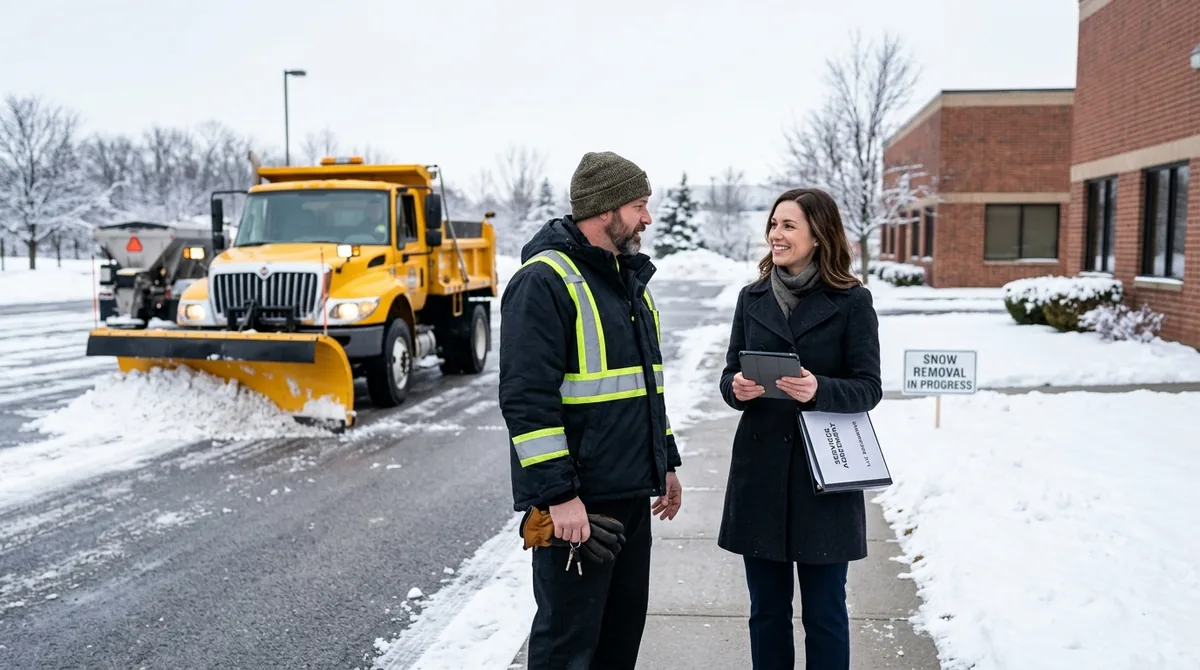
Snow removal is one of the few trades where your busiest days are also your riskiest. You are working before sunrise, in freezing conditions, driving heavy equipment near parked cars, storefronts, and people. Then you leave behind a surface that someone may slip on an hour later. Forming an LLC for a snow removal business is one of the most practical steps you can take before the first storm of the 2026–2027 season.
The cost is modest. Most states charge between $50 and $500 to file, and formation services such as ZenBusiness start at $0 plus your state fee for a basic package. Read on to learn what an LLC does and doesn’t protect, what it costs, and how to set one up before the snow arrives.
Why Snow Removal Businesses Face Unusual Liability Risk
Most service businesses worry about unhappy customers. Snow removal contractors worry about injuries and property damage. The common claims fall into a few categories:
- Slip-and-fall claims. A customer’s parking lot refreezes overnight, someone falls, and the property owner’s insurer looks for someone to blame. If your contract says you were responsible for ice management, you may be named in the lawsuit.
- Property damage. Plows clip curbs, bollards, landscaping, irrigation heads, and parked vehicles. A single damaged luxury car or a torn-up paver driveway can cost thousands of dollars.
- Vehicle accidents. Plow trucks are commercial vehicles operating in poor visibility on slick roads.
- Employee injuries. Cold-weather work, shoveling, and equipment operation carry real injury risk for any crew you hire.
I’ve seen too many small plow operators treat a $50,000 truck and a handshake contract as a “business.” Then one slip-and-fall claim arrives, and the owner discovers that their house, savings, and personal vehicle are all exposed because they never separated personal and business assets. In my experience, the owners who get hurt most are the ones who started small, grew quickly, and never revisited their structure.
What an LLC Does (and Doesn’t) Do for a Snow Plowing Business
A limited liability company is a legal entity separate from you. If the business is sued or can’t pay its debts, creditors can generally go after business assets, but not your personal home or savings. The SBA’s guide to choosing a business structure explains this separation in plain terms. For background, see our guide on what an LLC is.
An LLC for a snow removal business protects you in these situations:
- A vendor, equipment lender, or salt supplier sues the business over unpaid invoices.
- A customer claims your ice management was inadequate and wins a judgment larger than your insurance limit.
- A subcontractor’s mistake creates a claim against the company.
It does not protect you from:
- Your own negligence. If you personally cause an accident while driving the plow, you can still be personally liable.
- Personal guarantees. Many equipment loans, truck leases, and commercial contracts require you to guarantee them personally.
- Commingling. If you pay personal bills from the business account, a court can “pierce the corporate veil” and ignore the LLC.
- Insufficient insurance. An LLC is a layer of protection, not a substitute for coverage.
An LLC works best alongside good insurance and clean books. It is not a replacement for either.
Snow Removal Business Insurance: What You Actually Need
Lenders, property managers, and commercial clients will ask for a certificate of insurance before they sign a contract. Here is the coverage most snow removal operators carry. Premiums vary widely by state, fleet size, and claims history, so get quotes from agents who specialize in snow and ice work.
- Commercial general liability (CGL). Covers bodily injury and property damage from your operations. Check the policy carefully, because some CGL policies exclude or limit snow and ice claims, or require a separate endorsement.
- Commercial auto. Personal auto policies typically don’t cover plowing for pay. Plow trucks need commercial coverage that explicitly includes the plow attachment.
- Workers’ compensation. Required in most states once you have employees. Rules on whether owners and subcontractors are covered differ by state.
- Inland marine or equipment coverage. Covers skid steers, spreaders, and attachments that move between sites.
- Umbrella policy. Adds extra liability limits above your CGL and auto policies. Commercial property managers often require limits of $1 million to $2 million or more.
One gotcha: if you subcontract plowing to independent operators, your insurer may require you to collect their certificates of insurance. Without them, your policy may charge you extra at audit or deny a claim.
Snow Removal LLC Cost: Formation, Annual Fees, and Hidden Expenses
The snow removal LLC cost has three parts: the state filing fee, the optional service fee, and the ongoing costs people forget about.
| Cost item | Typical range |
|---|---|
| State filing fee | $50–$500, depending on the state |
| Formation service (optional) | $0–$349 on top of state fees |
| Registered agent (after first year, if not bundled) | $100–$300 per year |
| Annual or biennial report | $0–$300 per year, depending on the state |
| Business license or contractor registration | Varies by city and state |
Some states add large recurring charges. California, for example, imposes an $800 minimum franchise tax on LLCs. If you operate in a high-cost state, our California LLC $800 franchise tax guide explains how that works. For a state-by-state view of what to expect, see our breakdown of how much it costs to form an LLC.
Because snow work is seasonal, it’s tempting to skip annual reports during the summer when no one is plowing. Don’t. Missing a state filing can lead to penalties, loss of good standing, and even administrative dissolution, which removes the liability protection you formed the LLC to get.
Taxes for a Snow Plowing LLC
By default, a single-member LLC is taxed as a “disregarded entity.” That means business income and expenses are reported on your personal return (Schedule C), and you pay income tax plus self-employment tax on net profit. A multi-member LLC is taxed as a partnership by default. The IRS explains the self-employment tax at 15.3% on IRS.gov. Our guide to self-employment tax for LLC owners covers how to reduce it.
Here is a simple illustration, using round numbers for explanation only. Say your plowing LLC nets $80,000 in a year. At roughly 15.3% on most of that income, self-employment tax alone could be in the neighborhood of $11,000, before income tax. Once profit is consistently high, some owners elect S-corporation taxation so they can pay themselves a reasonable salary and take the rest as distributions, which may reduce self-employment tax. This only works if you meet the IRS requirements, and the savings must be weighed against payroll costs and added compliance. We compare the options in our LLC vs S-Corp guide. Speak with a CPA before making that election.
Seasonality and quarterly taxes. Snow income is lumpy. You may earn most of your revenue from December through March. The IRS still expects estimated tax payments throughout the year. Many seasonal owners set aside a fixed percentage of every payment into a separate tax account. If you want a refresher on the schedule, see our LLC quarterly tax payments guide.
Deductions to track. Common deductible expenses include fuel, plow and spreader repairs, salt and de-icer, truck depreciation, insurance premiums, subcontractor payments, and equipment storage. Keep a mileage and usage log for any vehicle that serves both personal and business purposes. Tax rules change, so confirm current depreciation limits with your tax professional.
Contracts, Subcontractors, and Day-to-Day Risk Management
Your LLC is only as strong as the paperwork around it. These habits make a real difference:
- Use written service agreements. Spell out trigger depths (for example, plow at 2 inches), service windows, whether ice management is included, and what you are not responsible for.
- Review indemnification clauses. Commercial property owners and property managers often push contracts that make the contractor take on all slip-and-fall risk. Don’t sign these without reading them, and ask your insurance agent whether your policy covers the liability you’re agreeing to absorb.
- Log every visit. Keep time-stamped records, GPS data, and photos showing when you plowed and salted. In a slip-and-fall dispute, these records are often your best defense.
- Know your state’s snow liability rules. Some states limit contractor liability in certain situations. Illinois, for example, has a Snow and Ice Removal Act that offers some protection for residential snow removal, though it doesn’t cover willful or wanton conduct. Rules differ widely, so check yours.
- Classify workers correctly. Misclassifying employees as independent contractors can trigger back taxes and penalties. See our guide on whether an LLC can have employees.
- Keep finances separate. Open a dedicated LLC bank account, and pay yourself through owner draws or payroll, not by swiping the business card at the grocery store.
If you already run a warm-weather business, such as landscaping, you can usually add snow services under the same LLC. Tell your insurer, because the added winter exposure should be reflected in your policy.
How to Form an LLC for Your Snow Removal Business
Here is the process I walk new contractors through. Allow a few days to a few weeks, depending on the state.
- Choose your state. In most cases, form in the state where you do the plowing. Forming elsewhere and then registering as a “foreign” LLC in your home state usually adds cost without benefit for a local service business.
- Pick a name. Check availability with your Secretary of State. Including “Snow” or “Plowing” in the name helps with local search, but check that it’s not already taken.
- Appoint a registered agent. This is a person or company with a physical address in your state who receives legal papers. See what a registered agent is.
- File the Articles of Organization. This is the official formation filing, with the state fee.
- Write an operating agreement. Even a single-member LLC should have one. It reinforces the separation between you and the company. Learn more in our LLC operating agreement guide.
- Get an EIN. The IRS issues them for free. Do not pay a third party for one. Here’s how to get an EIN for free.
- Open a business bank account, get licensed, and buy insurance. Check local requirements for business licenses and any municipal contractor registration, and get your insurance in place before your first contract starts.
Beneficial ownership reporting rules have shifted in recent years. As of 2025, FinCEN’s interim final rule removed the requirement for U.S.-formed companies and their owners to file BOI reports. Rules may change again, so verify the current status on FinCEN.gov or review our BOI report guide.
Best LLC Formation Services for Snow Removal Contractors
You can file directly with your state for the lowest cost, and many owners do. If you’d rather save time during the pre-season rush, a formation service handles the paperwork, tracks deadlines, and often includes extras. Pricing changes, so confirm current plans on each provider’s site. The table lists services in our standard order.
| Service | Starting price | Best for |
|---|---|---|
| ZenBusiness | $0 + state fee | Most snow removal startups |
| LegalZoom | $0 + state fee | Owners who want a well-known brand |
| Tailor Brands | Varies by plan | Owners who want branding and a logo bundled |
| Inc Authority | $0 + state fee | Lowest upfront cost |
| Northwest Registered Agent | Around $39 + state fee | Privacy-focused owners |
| Bizee | $0 + state fee | Budget-conscious owners |
| LLC Attorney | Varies | Attorney-backed formation |
My pick: ZenBusiness. For most plow operators, ZenBusiness hits the right balance. Its entry package is $0 plus state fees, and its paid tiers add an operating agreement template, EIN assistance, and compliance reminders. Those reminders are valuable when your attention shifts between seasons. See our ZenBusiness review for details.
Runner-up: LegalZoom. LegalZoom is a strong second choice if you want a long-established provider with optional legal support, though its add-on packages cost more. Our ZenBusiness vs LegalZoom comparison breaks down the differences. If you want a wider look, our best LLC services comparison ranks all of them.
Whichever you choose, read the fine print on renewal pricing. Some providers include a registered agent for the first year only, then charge for it afterward. And an attorney should review anything involving unusually large contracts or complex ownership.
Frequently Asked Questions
Do I need an LLC to start a snow removal business?
No law requires one, but it’s strongly advisable. Without an LLC, you operate as a sole proprietor, and your personal assets can be reached if the business is sued. Compare the two in our LLC vs sole proprietorship guide.
How much does it cost to start an LLC for a snow plowing business?
Expect a state filing fee between roughly $50 and $500, plus optional service fees. Ongoing costs such as annual reports and registered agent fees may add $100 to $500 per year, depending on your state.
Is an LLC enough, or do I also need snow removal business insurance?
You need both. An LLC separates your personal and business assets, but it doesn’t pay claims. Insurance pays for injuries and damage. Most commercial clients will also require proof of coverage before hiring you.
Can I plow snow with my personal truck under an LLC?
You can, but your personal auto policy likely won’t cover commercial plowing. Talk with an insurance agent about a commercial auto policy. If you’re financing the truck personally, also check the loan terms.
Should I elect S-corp status for my snow removal LLC?
It depends on your profit level. S-corp taxation can reduce self-employment tax once profits are comfortably above a reasonable salary, but it adds payroll and filing requirements. A CPA can model the numbers for you.
What happens if someone slips on ice after I serviced the property?
You or your insurer may face a claim. Your contract language, service logs, photos, and insurance limits will matter. An LLC may protect your personal assets if the claim exceeds coverage, as long as you kept the company properly separate and weren’t personally negligent.
Do I have to keep my LLC active during the off-season?
Yes. State annual reports, fees, and registered agent requirements continue year-round, even if no snow falls. Letting the LLC lapse can strip your liability protection. If you want to close down permanently, see how to dissolve an LLC properly.
Can I add snow removal to my existing landscaping LLC?
Usually yes, since many landscapers do this. Notify your insurer, update your contracts, and check whether your business license covers snow and ice services.
Final Thoughts
Snow removal can be profitable, but it’s also physically demanding and legally exposed. An LLC for a snow removal business gives you a clean separation between the company and your personal finances. Paired with proper insurance, solid contracts, and disciplined bookkeeping, it can keep one bad storm from becoming a personal financial disaster.
Form it before the first forecast of the season, not after. If you want the simplest path, start with ZenBusiness, and consider LegalZoom as an alternative. Then call your insurance agent and a local CPA to finish the setup.
The author name used in this article may be a pen name or pseudonym and is used for illustrative and editorial purposes only. This article is for informational purposes only and does not constitute investment, tax, or legal advice. Consult qualified professionals before making financial decisions. Pricing, fees, and regulations change, so verify current details with the relevant provider or government agency. This page contains affiliate links, and we may earn a commission at no extra cost to you.

James Caldwell
James Caldwell is a corporate compliance and tax strategist with over 15 years of experience helping small business owners navigate entity selection, tax planning, and regulatory requirements.