Who Is Exempt from BOI Reporting? The Complete 2026 Guide to FinCEN Exemptions
Disclosure: Some of the links in this article are affiliate links, meaning we may earn a commission if you click through and make a purchase, at no additional cost to you. We only recommend services we've researched and believe will be genuinely helpful.
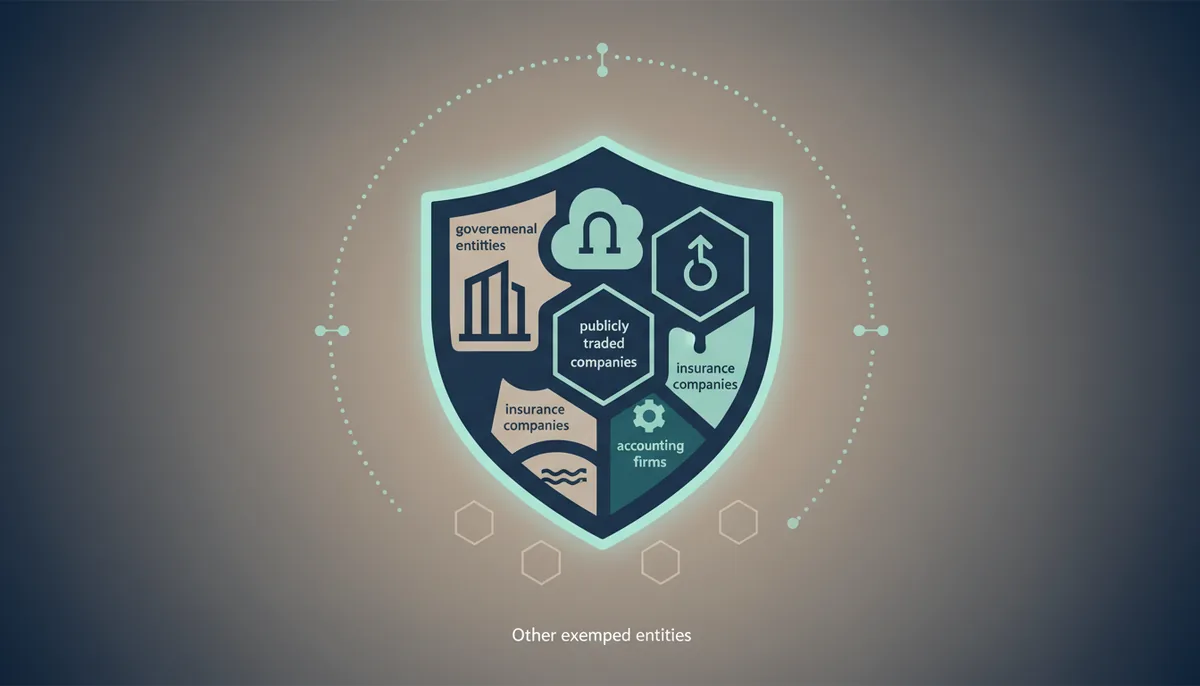
The question I get asked most often in 2026 isn’t “how do I file a BOI report?” — it’s “do I even need to file one?” And honestly, that’s the smarter question to ask first.
The Corporate Transparency Act (CTA), administered by the Financial Crimes Enforcement Network (FinCEN), requires millions of U.S. businesses to disclose their beneficial owners. But Congress built 23 specific exemptions into the law — and knowing whether your entity qualifies for one of them could save you significant time and compliance headaches. When I work with small business owners and first-time LLC founders using services like ZenBusiness or Northwest Registered Agent, my very first question is always: “Do you actually need to file?”
This guide lays out exactly who is exempt from BOI reporting, how each exemption works, and how to determine which category — if any — applies to your business.
What Is the BOI Reporting Requirement?
Before diving into exemptions, a quick recap of the rule itself. Under the Corporate Transparency Act, “reporting companies” — generally defined as corporations, LLCs, and similar entities formed or registered to do business in the United States — must file a Beneficial Ownership Information (BOI) report with FinCEN. This report identifies individuals who own or control 25% or more of the company, or who exercise substantial control over it.
The goal is anti-money laundering and financial transparency. For a comprehensive overview of who needs to file and how the process works, see our guide on what is a BOI report and who needs to file.
For entities that do not qualify as an exempt entity, the penalties for non-compliance can be serious — up to $591 per day in civil penalties (adjusted for inflation) and criminal sanctions in egregious cases. We cover this in detail in our article on BOI report penalties for late filing.
Now, who is exempt from BOI reporting? There are exactly 23 categories.
The 23 BOI Reporting Exemptions: Full Breakdown
FinCEN’s official BOI FAQ and the CTA statute identify these exempt categories. Each is defined specifically, and the burden is on the company to confirm it actually meets the criteria — not just that it looks similar to an exempt entity.
1. Securities Reporting Issuers
Companies required to file reports with the SEC under Section 12 or Section 15(d) of the Securities Exchange Act of 1934 are exempt. This covers publicly traded companies on major exchanges like NYSE and NASDAQ. Their ownership is already publicly disclosed.
2. Governmental Authorities
Any entity established under the laws of the United States, an Indian tribe, a state, or a political subdivision — and that exercises governmental authority — is exempt.
3. Banks
Banks defined under the Federal Deposit Insurance Act, the Bank Holding Company Act, or the International Banking Act are exempt. These institutions are already heavily regulated by federal and state banking authorities.
4. Federal Credit Unions and State-Chartered Credit Unions
Credit unions regulated by the National Credit Union Administration or state equivalents are exempt.
5. Bank Holding Companies and Savings and Loan Holding Companies
Entities regulated under the Bank Holding Company Act or the Home Owners’ Loan Act qualify for this exemption.
6. Money Services Businesses Registered with FinCEN
If your business is already registered as a money services business (MSB) with FinCEN, you are exempt from BOI reporting.
7. Broker-Dealers Registered with the SEC
Broker-dealers registered with the Securities and Exchange Commission under the Securities Exchange Act of 1934 are exempt.
8. Securities Exchange or Clearing Agencies
Any entity registered as an exchange or clearing agency under Section 6 or 17A of the Securities Exchange Act of 1934.
9. Other Exchange Act Registered Entities
This covers entities that register with the SEC under Section 12 of the Securities Exchange Act of 1934 and are required to file reports under Section 15(d) — broader than the first exemption.
10. Investment Companies and Investment Advisers Registered Under the Investment Company Act
Investment companies (mutual funds, ETFs) and investment advisers registered with the SEC under the Investment Advisers Act of 1940 are exempt.
11. Venture Capital Fund Advisers
Investment advisers that rely on an exemption from SEC registration under Section 203(l) or 203(m) of the Investment Advisers Act qualify — this primarily covers certain venture capital fund advisers.
12. Insurance Companies
State-regulated insurance companies as defined in Section 2 of the Investment Company Act of 1940 are exempt.
13. State-Licensed Insurance Producers
Individuals or entities licensed to sell, solicit, or negotiate insurance in a U.S. state and subject to state insurance regulation qualify for this exemption.
14. Commodity Exchange Act Registered Entities
Registered commodity pool operators, commodity trading advisors, futures commission merchants, and similar entities registered with the Commodity Futures Trading Commission (CFTC).
15. Accounting Firms
This is a narrower exemption than many assume. It covers public accounting firms registered with the Public Company Accounting Oversight Board (PCAOB). Small local CPA firms are typically not covered by this exemption unless PCAOB-registered.
16. Regulated Public Utilities
Utilities that provide telephone, electrical power, natural gas, water, or sewer services and are regulated by the federal government or a state public utility commission.
17. Financial Market Utilities Designated by the FSOC
Entities designated as systemically important financial market utilities by the Financial Stability Oversight Council (FSOC).
18. Pooled Investment Vehicles
This exemption covers investment funds operated or advised by an exempt bank, credit union, broker-dealer, or SEC-registered investment company or adviser.
19. Tax-Exempt Entities (Section 501(c) Organizations)
Organizations exempt from federal income tax under Section 501(c) of the Internal Revenue Code — including 501(c)(3) nonprofits, 501(c)(4) social welfare organizations, 501(c)(6) trade associations, and others.
20. Entities Assisting Tax-Exempt Entities
Entities that exist solely to support or benefit a 501(c) organization, are controlled by the 501(c) organization, and receive substantially all of their funding from such organization.
21. Large Operating Companies
This is the exemption most relevant to mid-size businesses, and we’ll cover it in depth in the next section.
22. Subsidiaries of Exempt Entities
Subsidiaries whose ownership interests are controlled or wholly owned, directly or indirectly, by certain exempt entities (not all 22 categories — the subsidiary exemption does not apply to all parent types). The qualifying parent categories include securities issuers, governmental authorities, banks, credit unions, bank holding companies, and a few others.
23. Inactive Entities
Entities that existed before January 1, 2020, are not engaged in active business, are not owned by a foreign person, have had no ownership changes in the past 12 months, have not sent or received more than $1,000 in the past 12 months, and hold no assets — including ownership interests in other entities.
The Large Operating Company Exemption Explained
For many businesses growing toward real size, Exemption 21 — the “large operating company” exemption — is the most significant one to understand. A company qualifies if it meets all three of the following conditions:
- Employees: More than 20 full-time employees in the United States. Note: part-time workers don’t count toward this threshold.
- Revenue: Over $5,000,000 in gross receipts or sales in the previous year, as reported on the company’s most recently filed federal tax return.
- U.S. Physical Presence: An operating presence at a physical office within the United States (not just a registered agent address or P.O. box).
In my experience working with growing companies, the 20 full-time employee threshold is the most commonly misunderstood part. A company with 30 part-time workers and two full-time owners does not qualify. The statute says “full-time employees” as defined by the IRS — generally 30 or more hours per week, or at least 130 hours per month.
Additionally, a company cannot claim this exemption based on the revenue or employees of an affiliated company. Each entity stands alone for purposes of the large operating company test.
If your company crosses these thresholds after previously filing a BOI report, you can submit an updated report to claim exempt status. Conversely, if you lose the exemption (say, revenue drops below $5M), you’ll need to file within 30 days of becoming a reporting company again.
For context on why compliance matters for growing companies and how the right formation structure supports long-term operations, see our guide on can an LLC have employees.
Are Inactive Businesses Exempt from BOI Reporting?
Yes — but only under very specific conditions. The Exemption 23 (inactive entities) is one of the most commonly claimed exemptions, and also one of the most frequently misapplied.
An entity qualifies as exempt under the inactive entity exemption only if all six conditions are met:
- The entity was in existence before January 1, 2020
- The entity is not engaged in active business
- The entity is not owned by a foreign person (directly or indirectly)
- The entity has experienced no change in ownership in the past 12 months
- The entity has not sent or received more than $1,000 through any financial account in the preceding 12 months
- The entity holds no assets, including interests in other entities, bank accounts, real property, or any financial instrument
This last condition trips up many business owners who created holding companies or shelf entities. If the entity holds even a single asset — real estate, a bank account with $1,500, ownership in an operating LLC — it does not qualify for the inactive entity exemption.
If you’re not sure whether your dormant company qualifies, the safest approach is to consult a compliance attorney or file the report. FinCEN’s official BOI FAQ page provides detailed guidance on this exemption.
Tax-Exempt Entities and BOI Reporting
If your organization holds a determination letter from the IRS confirming 501(c) status, you are generally exempt from BOI reporting. This covers:
- 501(c)(3) — Public charities and private foundations
- 501(c)(4) — Civic leagues and social welfare organizations
- 501(c)(6) — Business leagues and trade associations
- 501(c)(7) — Social and recreational clubs
- Other 501(c) subcategories
Importantly, the exemption applies even if your nonprofit has not yet received the final IRS determination letter, provided you have applied and would qualify under Section 501(c). However, I’d caution organizations in the pending stage to document this carefully — the exemption attaches to the tax-exempt status, so if the application is ultimately denied, BOI filing obligations would retroactively apply.
For-profit subsidiaries or related entities of 501(c) organizations are generally not automatically exempt — they must qualify under their own applicable exemption category (e.g., as an entity assisting a tax-exempt entity under Exemption 20, or as a large operating company).
How to Determine If Your LLC Is Exempt
For the vast majority of small LLCs — single-member LLCs, small multi-member LLCs, professional LLCs — the honest answer is: you are probably not exempt. The 23 exemptions are designed for regulated financial institutions, large corporations, and specific government or nonprofit structures.
A straightforward small LLC formed to operate a consulting firm, freelance business, e-commerce store, or rental property does not fall into any of the 23 categories. If you’re unsure whether your LLC needs to file, our article on do I need a BOI report for my LLC walks through the decision tree in detail.
If you’ve confirmed you do need to file, the process is straightforward. See our complete walkthrough at how to file a BOI report step by step.
When forming a new LLC in 2026, many LLC formation services have added BOI compliance tools to their offerings. Northwest Registered Agent now includes BOI filing reminders and compliance alerts as part of their registered agent service, which is a genuinely useful feature given the confusion this law has caused. ZenBusiness similarly offers compliance calendar tools. While these services can remind you to file, they don’t replace the need to understand whether you qualify for an exemption in the first place.
What Happens If You File When You Didn’t Need To?
Filing a BOI report when you are actually exempt is not penalized — there is no penalty for voluntary over-compliance. However, the information you submit to FinCEN becomes part of the federal database that law enforcement and certain other agencies can access. There’s no practical harm in filing if you’re unsure, but if you’re clearly exempt (e.g., a PCAOB-registered accounting firm or federally chartered bank), filing unnecessarily creates unnecessary data entry into a federal registry.
The more important mistake to avoid is the reverse: not filing when you should have. As of 2026, FinCEN enforcement activity for non-compliant reporting companies has increased following the resolution of the major court challenges that slowed enforcement in 2024 and early 2025. The $591-per-day civil penalty accrues daily and can compound quickly for willful failures.
According to FinCEN’s official enforcement guidance, willful non-compliance — meaning a deliberate decision to not file despite knowing you’re required to — can also result in criminal penalties of up to $10,000 and imprisonment of up to 2 years. This is rare in practice but real.
Frequently Asked Questions
Who is exempt from BOI reporting? There are 23 categories of exempt entities under the Corporate Transparency Act, including large operating companies (20+ full-time employees, $5M+ in revenue, U.S. physical office), publicly traded companies, banks, credit unions, insurance companies, 501(c) nonprofits, SEC-registered investment advisers, and inactive entities meeting all six statutory conditions.
Are sole proprietorships exempt from BOI reporting? Yes. Sole proprietorships are not “reporting companies” under the CTA because they are not created by filing a document with a state agency. Only entities formed through state filings — LLCs, corporations, limited partnerships — are generally covered. A sole proprietor operating without a separate legal entity has no BOI filing obligation.
Do single-member LLCs need to file a BOI report? In most cases, yes. Single-member LLCs are reporting companies unless they qualify for one of the 23 exemptions. The most common exemption for small single-member LLCs is the inactive entity exemption, but only if the entity truly has no assets and no business activity and predates January 1, 2020.
Is a holding LLC exempt from BOI reporting? Generally no, unless it qualifies under the subsidiary exemption (owned 100% by a qualifying exempt entity) or another applicable category. A holding LLC that owns real estate, other LLCs, or financial assets is typically a reporting company.
What is the large operating company BOI exemption? A company is exempt as a “large operating company” if it has more than 20 full-time U.S. employees, more than $5 million in annual gross receipts or sales on its most recent federal tax return, and an operating presence at a U.S. physical office (not just a registered agent address).
Are nonprofits exempt from BOI reporting? Yes. Organizations that hold 501(c) status under the Internal Revenue Code are exempt from BOI reporting. This includes 501(c)(3) charities, 501(c)(4) social welfare organizations, and other subcategories. Organizations whose exemption application is pending may also qualify.
What happens if a company loses its exempt status? If a company no longer meets the criteria for an exemption — for example, revenue drops below $5 million or the organization loses its tax-exempt status — it becomes a reporting company. FinCEN regulations give newly non-exempt entities 30 days to file their initial BOI report from the date they lose exempt status.
Do foreign companies operating in the U.S. need to file BOI reports? Foreign companies registered to do business in the United States are generally covered as “foreign reporting companies” and must file BOI reports, unless they qualify for one of the 23 exemptions. The exemptions apply equally to domestic and foreign reporting companies.
Conclusion
The BOI reporting landscape in 2026 has matured significantly from the chaotic early implementation period. For most small LLCs and closely held businesses, the straightforward answer to “who is exempt from BOI reporting” is: probably not you — unless you’re a large financial institution, a registered nonprofit, a publicly traded company, or a genuinely inactive legacy entity.
The 23 exemptions are specific and technical. Claiming an exemption incorrectly is itself a compliance risk. When in doubt, file the report. The process takes less than 30 minutes for most small businesses and the cost is nothing — FinCEN’s BOSS filing system is free. The downside of unnecessary filing is minimal; the downside of missed filing is potentially severe.
If you need to get your LLC set up with the compliance infrastructure to handle BOI and other ongoing requirements, Northwest Registered Agent and ZenBusiness both offer registered agent and compliance reminder services that can help you stay on top of annual obligations.
For more BOI guidance, see:
- BOI Report Deadline 2026: What Every LLC Owner Needs to Know
- How to File a BOI Report Step by Step
- Do I Need a BOI Report for My LLC?
The author name used in this article may be a pen name or pseudonym and is used for illustrative and editorial purposes only. This article is for informational purposes only and does not constitute investment, tax, or legal advice. Consult qualified professionals before making financial decisions. BOI reporting requirements may change due to ongoing litigation and regulatory updates — always verify current requirements at FinCEN.gov.

James Caldwell
James Caldwell is a corporate compliance and tax strategist with over 15 years of experience helping small business owners navigate entity selection, tax planning, and regulatory requirements.